
BLOG
Meaimee 3: An Advanced Content Management and Creation Platform


Introduction
When I first sat down with meaimee 3, I expected another CMS with a shiny interface and the same old friction underneath. Instead, I found a platform that treats content like a living system—one that needs structure, collaboration, analytics, and a little creative magic in the mix. In this guide, I’ll walk through how meaimee 3 works, what sets it apart, and the practical ways I use it to plan, produce, and scale content without chaos.
Why meaimee 3 Stands Out
I care about tools that reduce busywork while protecting quality. Meaimee 3 earns a spot in my stack because it balances creativity with governance.
- Unified workspace: Strategy, briefs, writing, media, approvals, and analytics live in one place, which cuts tool-switching and keeps context intact.
- Structured content modeling: Create reusable content types (articles, landing pages, FAQs, release notes) with fields, validations, and relationships for consistency across teams and channels.
- AI-assisted creation: Drafts, outlines, headlines, summaries, and translations are accelerated by built-in assistance while still leaving room for editorial voice.
- Granular permissions: Editors, contributors, reviewers, and guests get tailored roles so collaboration doesn’t compromise standards or security.
- Omnichannel delivery: Publish to web, app, email, and social from a single source of truth, with channel-specific variants and metadata.
Getting Started the Smart Way
A smooth setup helps you ship value quickly. Here’s my onboarding playbook.
- Audit your current content: Map what you have, what performs, and what gaps exist. Decide which templates to build first.
- Model the essentials: In meaimee 3, I start with Articles, Guides, and Announcement content types, each with fields for SEO, assets, CTA blocks, and related items.
- Define workflows: Create stages like Draft → Edit → Review → Legal → Ready → Published. Assign SLAs so nothing languishes.
- Set permissions and views: Editors see what they need; stakeholders get read-only dashboards. Less noise, fewer mistakes.
- Connect channels: Wire up your website, newsletter, and social accounts so content flows automatically once approved.
Content Planning and Strategy
Roadmaps That Reduce Guesswork
The planning dashboard turns ideas into schedules. I group initiatives by theme and outcome—product education, thought leadership, lifecycle nurture—and assign owners with deadlines. Color-coded calendars and capacity views help me avoid overloading the team.
Briefs That Drive Better Drafts
Inside meaimee 3, briefs live with the content item. I attach audience insights, key messages, search intent, and competitive notes. The integrated research tools surface relevant queries and questions so every draft answers something specific.
Creation and Collaboration
From Outline to Publish-Ready
I start with the AI-assisted outline, then refine sections and inject examples. The editor supports rich media, code blocks, callouts, and footnotes, so long-form pieces stay readable. Version history makes it easy to revert or compare.
Reviews Without the Ping-Pong
Inline comments, tracked changes, and suggested edits keep feedback precise. I route compliance or legal review automatically using rules—if a piece mentions pricing, it gets flagged for the right approver.
Asset Management Without the Mess
The media library organizes images, video, audio, and design files with tags, licenses, and expiry dates. I love the quick crops and responsive variants, which save me from exporting a dozen sizes manually.
SEO and Discoverability
Built-In Optimization
Meaimee 3 bakes in the basics: custom slugs, titles, meta descriptions, schema templates, and canonical tags. Real-time checks flag missing alt text, thin headings, or overstuffed keywords, nudging me toward best practices.
Performance Insights
I track impressions, CTR, and ranking trends alongside engagement metrics. The platform ties search data to specific content items, which clarifies what to refresh versus what to retire.
Personalization and Experiments
Targeted Variants
Create audience segments (e.g., new visitors, customers, partners) and swap headlines, CTAs, or examples without duplicating entire pages. Content editors control the messaging while the system enforces guardrails.
A/B and Multivariate Tests
Launch tests from within the editor—no extra scripts. Define goals (signups, time on page, demo requests) and watch statistically sound results roll in. Winning variants can auto-promote after confidence thresholds.
Publishing and Distribution
One Source, Many Channels
From a single content item, I generate channel-specific snippets—web page, blog post, newsletter block, LinkedIn update, and social captions. UTM parameters and link tracking are built-in, so I can see which channel is pulling its weight.
Localization at Scale
For global teams, meaimee 3 manages language variants with translation memory, glossaries, and lockable fields so product names and legal text stay consistent. Reviewers approve local nuances before publish.
Analytics That Guide Action
Content Health Dashboards
I monitor freshness, broken links, load performance, accessibility compliance, and internal linking. When something slips, automated tasks prompt owners to fix it.
Attribution You Can Defend
Multi-touch attribution connects content to pipeline and revenue, not just pageviews. I align dashboards to the funnel—awareness, consideration, conversion—and plan the next wave accordingly.
Governance and Security
Compliance by Design
Retention policies, audit logs, SSO/SAML, and role-based access keep data safe. Approval trails and content histories satisfy legal and industry requirements without slowing the team down.
Templates That Enforce Quality
Reusable blocks—disclaimers, product specs, pricing notes—ensure that critical language is consistent. Editors can’t accidentally delete required elements.
Practical Use Cases
For Marketing Teams
- Launch product campaigns with coordinated pages, emails, and social in one workflow.
- Build resource centers with filters, tags, and recommended reading paths.
- Run webinars and events with registration pages, follow-up sequences, and recap posts.
For Product and Support
- Maintain living documentation with version notes and deprecation warnings.
- Power in-app help hubs with structured FAQs and search-friendly snippets.
- Align release narratives across marketing, docs, and sales enablement.
For Media and Publishing
- Manage multi-author magazines with editorial calendars and rights-managed assets.
- Syndicate content to partner platforms while preserving canonical authority.
- Monetize with subscription walls and member-only newsletters.
Best Practices I Swear By
- Start small with 3–5 content types and expand as patterns emerge.
- Use fields and validations to encode your style guide into the system.
- Keep workflows short; reserve heavy gates for regulated content.
- Refresh high-performing evergreen pieces before creating something new.
- Document conventions in a knowledge base so onboarding stays painless.
Final Thoughts
Meaimee 3 respects both the craft and the operations of content. It gives me enough structure to scale without smothering creativity. If you’re juggling multiple channels, stakeholders, and standards, this platform helps you ship faster, learn continuously, and keep the quality bar high.

Introduction
Staying on top of fast-moving technology doesn’t have to be intimidating. With whatsontech as our guiding keyword, I’m laying out a clear, friendly, and practical roadmap to help you understand new gadgets, master everyday apps, and make smarter digital choices. Think of this as your companion for easy tech guides, hands-on tips, and timely updates—structured so you can jump right to what you need and get back to your day.
Understanding the Heart of whatsontech
The phrase “whatsontech” blends curiosity with clarity. It suggests one place where you can find what’s happening in technology—plus the know-how to use it. Here’s what I focus on whenever I write or curate under this theme:
- Plain-language guides: No jargon gauntlets. I translate complex ideas into everyday terms.
- Actionable checklists: Steps you can follow today, not someday.
- Timely updates: Filters for the noise so only the useful trends break through.
- Practical reviews: Real-world impressions over lab-only specs.
Who This Is For
- Beginners who want tech to feel less mysterious
- Busy people who need quick wins and trustworthy recommendations
- Tinkerers who enjoy step-by-step tutorials and optimization tips
Core Guides: Do More With Your Devices
Getting Started: Setups That Save Time
A great experience starts with a good setup. Whether it’s a phone, laptop, or smart home device, I always begin with a groundwork checklist:
- Update the operating system and firmware to the latest stable version.
- Turn on essential security: device lock, two-factor authentication, and “Find my device.”
- Uninstall or disable bloatware; keep only what you use.
- Customize notification settings to reduce interruptions.
- Back up to a reliable cloud or external drive.
These five moves instantly improve performance, safety, and peace of mind.
Everyday Speed Boosts
If your device feels sluggish, I reach for these quick fixes:
- Clear browser cache and unused extensions
- Trim startup apps
- Free up storage; aim for at least 15–20% free space
- Update drivers and apps
- Toggle on battery or performance modes depending on your goals
Privacy Essentials
Your data deserves respect. Here are habits I treat as non-negotiable:
- Use a password manager and unique, strong passwords
- Enable multi-factor authentication wherever possible
- Review app permissions quarterly
- Encrypt sensitive files and drives
- Be selective with public Wi‑Fi; stick to VPNs for sensitive tasks
App Mastery: Smarter Workflows, Less Friction
Communication and Collaboration
- Consolidate messaging where possible to reduce context switching
- Star or pin important chats and channels
- Create templates or snippets for repeated replies
- Use scheduled send to avoid after-hours noise
Notes and Documents
- Keep one “source of truth” for notes
- Use tags and a minimal folder structure
- Templates for recurring documents save loads of time
- Sync across devices so your brain travels with you
Automation Basics
Small automations create big relief:
- Email rules to auto-sort newsletters and receipts
- Calendar blockers to preserve focus time
- Shortcuts for routine tasks (renaming files, resizing images)
- Triggers linking apps together—when X happens, do Y
Security and Safety: Built-In Shields You Should Use
Account Hygiene
- Run a monthly security checkup on major accounts
- Rotate recovery codes and confirm backup email/phone numbers
- Audit connected apps and revoke what you don’t use
Device Protections
- Enable disk encryption (BitLocker, FileVault, device-level encryption on mobile)
- Keep Bluetooth and location off by default; toggle on only when needed
- Use reputable security suites, especially on Windows and Android
Phishing Awareness
Train yourself to pause before clicking:
- Inspect sender addresses and URLs
- Be skeptical of urgency and attachments you didn’t expect
- Verify requests for money or credentials through a second channel
Buying Guides: Choose Tech That Fits Your Life
How to Evaluate Devices
When comparing gadgets, I weigh these factors:
- Purpose: What problem does this solve for you?
- Longevity: Update commitment and repairability
- Performance-to-price: Real-world speed, not just benchmarks
- Ecosystem fit: Does it play nicely with your current gear?
- Support: Warranty, service centers, and community help
Smart Budgeting
- Set a ceiling and list non-negotiables
- Buy last year’s flagship for excellent value
- Consider refurbished with a solid warranty
- Avoid spec-chasing; map features to actual needs
Trends and Updates: Noise-Free Briefings
What Matters in Emerging Tech
I sift trends through a simple lens: Is this useful now, building toward practical value, or purely experimental? That helps separate hype from what deserves your attention.
- AI in everyday apps: editing, summarizing, and assistive features
- On-device intelligence: better privacy and speed for common tasks
- Battery advancements: longer life, faster charging, safer chemistries
- Connectivity upgrades: Wi‑Fi 7, 5G improvements, and smarter routers
Staying Informed Without Overload
- Subscribe to one or two focused newsletters
- Set alerts for key topics instead of doomscrolling
- Batch your reading—twice a week beats constant checking
- Follow creators who test in the real world
Handy How‑Tos: Quick Wins You Can Use Today
Speed Up Your Browser
- Disable heavy extensions and auto-play videos
- Turn on hardware acceleration if supported
- Use a lightweight content blocker for ad-heavy sites
Organize Your Photos
- Create yearly and monthly albums automatically
- Deduplicate with trusted tools
- Add tags for people, places, and events
- Back up originals to two locations (one offsite)
Clean Your Inbox
- Unsubscribe ruthlessly from stale newsletters
n- Use search operators to archive by sender or date
- Star anything requiring action and schedule replies
Accessibility and Inclusivity: Tech for Everyone
Make Devices Easier to Use
- Turn on larger text and high-contrast modes
- Use voice control or dictation for hands-free input
- Enable live captions for calls and videos
Share Inclusively
- Write descriptive alt text for images
- Use clear headings and readable fonts
- Avoid color-only cues; pair with symbols or labels
Maintenance and Longevity: Keep Gear Going
Routine Care
- Dust vents and clean ports every few months
- Replace thermal paste and batteries when performance dips
- Use protective cases and surge protectors
Sustainable Choices
- Repair before replacing when possible
- Recycle through certified e‑waste programs
- Donate usable gear to schools and nonprofits
Final Thoughts: Your whatsontech Companion
Tech should make life smoother, not noisier. With a practical approach to guides, tips, and updates, whatsontech becomes your reliable helper—clear when you need instructions, calm when trends get loud, and steady when you’re choosing what to buy. I’ll keep refining this playbook so you can spend less time troubleshooting and more time using technology to do what you love.
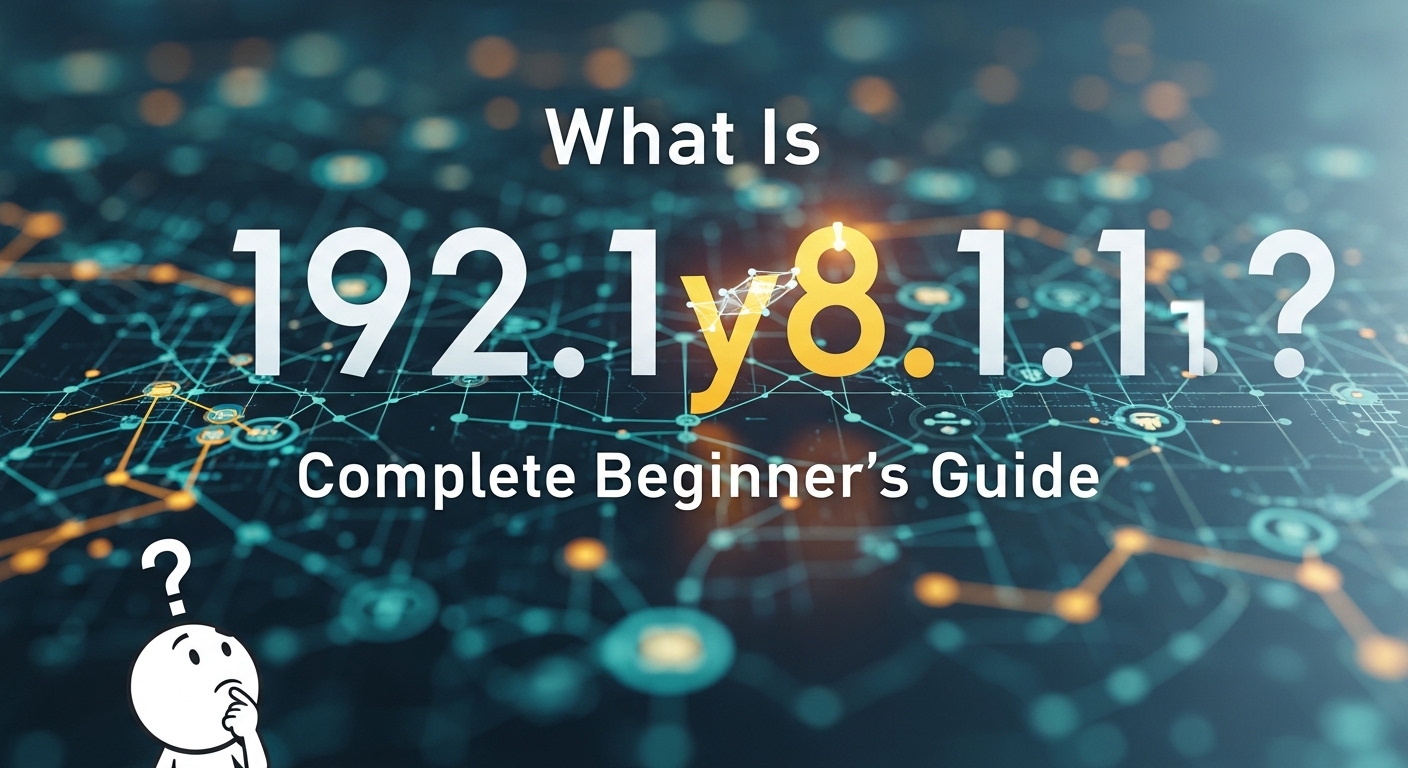
I’ll start with the big question: what exactly is 192.1y8.1.1? In practice, people encounter this string as a version-like identifier or a shorthand label inside documentation, dashboards, and changelogs. While it resembles an IP address at first glance, it is not a standard IPv4 or IPv6 address. Instead, you can think of 192.1y8.1.1 as a human-readable tag—often used to pin a feature set, policy revision, firmware build, or configuration profile—so that teams can talk about “the same thing” without ambiguity.
Why 192.1y8.1.1 Matters
In a world full of moving parts—apps, devices, policies—labels do the heavy lifting. Here’s why a well-structured tag such as 192.1y8.1.1 earns its keep:
- Traceability: You can pinpoint which configuration or feature set was active when an issue occurred.
- Governance: Audit teams can connect approvals and risk assessments to a specific version.
- Rollbacks: If something breaks, you can roll back to the exact prior state instead of a guess.
- Communication: Stakeholders speak the same language in tickets, sprints, and release notes.
I lean on these identifiers any time I’m coordinating cross-team changes or validating that environments match.
Common Use Cases
Software and Firmware Releases
Engineering teams often adopt identifiers like 192.1y8.1.1 to label internal builds or release candidates. The pattern accommodates:
- Major track (192)
- Experimental branch or channel (1y8)
- Patch iteration (1.1)
This helps QA confirm which artifacts were tested and which fixes shipped to production.
Policy and Compliance Revisions
Compliance frameworks evolve. A tag such as 192.1y8.1.1 can denote a specific ruleset for access control, data retention, or logging. When auditors ask, “Which controls were in force on that date?” you can answer with confidence.
Network and Infrastructure Templates
While the label looks like an IP, in practice it may represent a template ID for infrastructure-as-code modules, cloud security groups, or container runtime profiles. Teams bind their deployments to the tag so that every environment pulls the same, verified template.
How to Interpret 192.1y8.1.1 in Your Context
Because meanings vary, I use a short checklist before documenting or acting on a label:
- Source the owner: Who created and maintains 192.1y8.1.1 (product, platform, or compliance)?
- Read the changelog: What changed from the prior tag? Look for breaking changes, deprecations, and security notes.
- Confirm scope: Does it apply to all regions/environments, or only a subset (e.g., staging only)?
- Map dependencies: Which services, APIs, or hardware require this label to stay compatible?
- Define lifecycle: When does 192.1y8.1.1 reach end of support, and what’s the successor?
If any of these answers are missing, I pause rollouts until we fill the gaps.
Best Practices for Managing Version-Like Labels
Establish a Naming Convention
- Use consistent separators (dots or hyphens) and avoid look-alike characters.
- Reserve a slot for emergency patches so you don’t bump major numbers unnecessarily.
- Document examples and counterexamples so new team members learn fast.
Maintain a Single Source of Truth
- Keep a central registry (a simple JSON, a wiki page, or a catalog service) for live tags like 192.1y8.1.1.
- Link each tag to release notes, test results, and approval records.
- Automate status: mark deprecated, active, and superseded states clearly.
Automate Validation and Drift Detection
- Add CI checks to block merges that reference unknown or deprecated tags.
- Use policy-as-code to assert that environments run the intended label.
- Trigger alerts if runtime configs drift from 192.1y8.1.1 to an unapproved value.
Troubleshooting With 192.1y8.1.1
When something goes sideways, I follow a tight loop:
- Verify the tag: Confirm the system truly runs 192.1y8.1.1 (don’t trust screenshots).
- Compare diffs: What changed since the last known-good label? Focus on security and dependency updates.
- Reproduce: Spin up an isolated environment pinned to the same tag.
- Roll back or hotfix: If severity is high, revert fast; otherwise, ship a small patch like 192.1y8.1.2.
- Document lessons: Update runbooks so future incidents resolve in minutes, not hours.
Security Considerations
- Access control: Limit who can create, promote, or deprecate tags. Use code review and approvals.
- Integrity: Sign artifacts and store checksums associated with 192.1y8.1.1 so you can verify provenance.
- Exposure: Avoid leaking internal tags to public logs or screenshots if they reveal architecture details.
- Least privilege: Ensure services bound to the tag only receive the permissions that version requires.
Documentation Essentials
Great documentation turns a cryptic string into shared understanding:
- Plain-language summary: What does 192.1y8.1.1 represent, in one sentence?
- Change history: Date, owner, purpose, risk, and rollback plan.
- Compatibility matrix: Supported OS versions, libraries, and endpoints.
- Operational runbook: Deploy, verify, roll back, and monitor.
Getting Started Checklist
- Locate the owner and documentation for 192.1y8.1.1
- Confirm the environments it applies to
- Read the latest changelog and risk notes
- Validate dependencies and backward compatibility
- Run a canary or staged rollout
- Monitor key metrics and error rates
- Plan end-of-life and the upgrade path to the next tag
FAQ’s
Is 192.1y8.1.1 an IP address?
No. The presence of the letter “y” breaks the IPv4 pattern, and it doesn’t match IPv6 either. Treat it as a label, not a routable address.
Can I use semantic versioning rules for it?
Yes—if your team agrees. Map major/minor/patch to your three logical parts and stick to it.
How do I reference it in code safely?
Store it in configuration, not source. Use environment variables or parameter stores so you can swap it without redeploying.
What if multiple teams need different settings under the same tag?
Avoid overloading. Create a clear variant like 192.1y8.1.1-a and document the divergence to prevent confusion.
Final Thoughts
A label like 192.1y8.1.1 is only as useful as the clarity behind it. When I treat it as a disciplined, documented contract between teams—complete with ownership, changelogs, and automation—it becomes a powerful tool for reliability, audits, and speed. Start simple, write things down, and let the process carry the weight so your teams can ship with confidence.

Esséce is an emerging conceptual term often used in discussions about identity, branding, and lifestyle expression. It is not a standardized dictionary word, but rather a modern stylistic idea associated with authenticity, personal presence, and how individuals or brands define “who they are” in a digital and cultural environment.
Meaning of Esséce
The term “Esséce” is generally interpreted as a stylized form of “essence,” referring to:
- The true core of a person or brand
- Authentic identity beyond appearance
- A consistent personal or brand expression
- Emotional and visual identity alignment
It is commonly used in creative, marketing, and self-development contexts.
Esséce in Lifestyle
In lifestyle contexts, Esséce focuses on how individuals express their identity through daily choices.
Key Aspects:
- Personal style and fashion
- Values and belief systems
- Habits and routines
- Social presence and communication style
It emphasizes living in alignment with one’s inner identity rather than external pressure.
This connects closely with ideas in Lifestyle Psychology, which explores how personal choices reflect identity and well-being.
Esséce in Branding
In branding, Esséce refers to the core identity of a brand that shapes how it is perceived by others.
Brand Esséce Includes:
- Visual identity (logos, colors, design style)
- Brand voice and messaging
- Emotional connection with audience
- Consistency across platforms
A strong Esséce helps a brand become recognizable and trustworthy.
Why Esséce Matters in Modern Digital Culture
In today’s online world, identity is no longer just physical—it is also digital. Esséce matters because:
- People build personal brands on social media
- Businesses compete for emotional connection, not just products
- Authenticity is valued more than polished advertising
- Online identity influences reputation and opportunities
Platforms like Instagram and TikTok play a major role in shaping this digital identity expression.
Esséce in Personal Branding
For individuals, Esséce helps define how they present themselves online and offline.
It includes:
- Personal storytelling
- Content style and tone
- Visual aesthetics
- Communication patterns
Creators, influencers, and entrepreneurs often build their success by maintaining a strong and consistent Esséce.
Key Characteristics of Esséce
A strong Esséce typically includes:
- Authenticity: staying true to identity
- Consistency: uniform expression across platforms
- Emotional clarity: clear message and tone
- Recognition: easily identifiable style or presence
- Purpose: meaningful direction behind expression
Esséce vs Traditional Branding
| Aspect | Traditional Branding | Esséce Concept |
|---|---|---|
| Focus | Market image | True identity |
| Style | Structured marketing | Organic expression |
| Goal | Sales and recognition | Authentic connection |
| Approach | External positioning | Internal essence |
Applications of Esséce Concept
1. Personal Development
Helps individuals understand their core identity and values.
2. Business Branding
Used to create emotionally strong and authentic brand identities.
3. Content Creation
Guides creators in building a consistent online presence.
4. Creative Industries
Influences fashion, design, music, and storytelling.
Challenges of Maintaining Esséce
- Pressure to follow trends instead of authenticity
- Over-commercialization of personal identity
- Difficulty in maintaining consistency
- Confusion between image and true self
Balancing authenticity with visibility is a key challenge.
FAQ’s
1. What does Esséce mean?
It refers to the core identity or essence of a person or brand expressed through lifestyle and branding.
2. Is Essé ce a real word?
It is a stylized or conceptual term, not a standard dictionary word.
3. How is Ess éce used in branding?
It defines the emotional and visual identity of a brand.
4. Why is Esséce important?
It helps create authentic, consistent, and meaningful identity expression.
5. Who uses the concept of Ess éce?
Creators, marketers, designers, and individuals focused on personal branding.
Conclusion
Esséce represents a modern way of understanding identity—where lifestyle, personality, and branding come together into a unified expression of authenticity. In both personal and professional contexts, it emphasizes staying true to one’s core essence while communicating it clearly to the world.
-

 HEALTH1 month ago
Goutabio: Revolutionizing Health with Natural Solutions
-

 HOME1 month ago
Wollwirrware: The Growing Culture Around Community
-
 BLOG1 month ago
Gonewing: The Emerging Concept Shaping Modern Digital Innovation
-

 ENTERTAINMENT1 month ago
Why MagFuseHub.com Is Worth Watching in the Digital Space
-
 BLOG1 month ago
Haskawana: The Emerging Idea Shaping Modern Digital Thinking
-

 BLOG1 month ago
Leslie Knipfing: Age, Height, Net Worth, and Biography
-

 HOME1 month ago
Enclomiphene: Hidden Science Behind Natural Testosterone Boost
-

 BLOG1 month ago
Noelle Inguagiato: Life After Divorce and Her Path Beyond the Spotlight